There's a moment I think about often. We were wrapping a shoot for OneFamily FL — a nonprofit doing restorative work with families navigating foster care and reunification in Central Florida. A mother looked into the camera and talked about the day her kids came home. She didn't have eloquent words. She had the kind of trembling quiet that comes when something you've prayed for ten thousand times finally happens. We kept rolling. We didn't say anything. That silence — thirty seconds of a woman trying to hold herself together because her family was whole again — was the most powerful thing I've ever captured on camera.
That's what nonprofit video production is, at its best. Not a polished promotional piece. Not a statistics slide show with sad background music. Not a well-lit talking head reading mission statement language. It's the camera being present for moments that would otherwise disappear — and trusting that the truth of those moments, faithfully preserved, will move people to act.
I've been doing this work for over a decade out of Deltona, Florida. I've made over 1,000 videos for businesses and organizations across Central Florida. But the work I care most about — the projects that still sit with me long after the hard drive is filed away — are the ones made for organizations trying to do something good in the world. This guide is everything I know about making video that actually raises money, recruits volunteers, and changes how people understand a cause.
Story Is Not a Tactic. It's the Strategy.
The nonprofit sector tends to communicate in one of two modes: data or plea. The data mode shows you charts — people served, meals distributed, nights of shelter provided. The plea mode appeals directly to guilt — "children are suffering, you can help, please give." Both have their place in a fundraising ecosystem. Neither is a substitute for story. And neither is as powerful as a story that makes a donor feel what it costs to not give.
Here's what the research confirms and what ten years in the field has shown me personally: donors give to people, not programs. They give to the grandmother who finally has a home, the teenager who found a mentor, the family that stayed together. The program is the mechanism. The person is the reason. When your organization leads with data, you're speaking to a donor's head. When you lead with story, you're speaking to the part of them that actually makes a giving decision.
The difference between an impact report and an emotional story is not production quality. It's the presence of a specific human being. An impact report says: "We served 847 families this year." An emotional story says: "Maria had been sleeping in her car with her three kids for six weeks before she called us. This is what happened." The first is a number. The second is a door. When a donor walks through it — when they let themselves imagine Maria's fear and relief — they are not the same donor they were before they pressed play.
This is what I mean when I say story is the strategy, not a tactic. You don't add a story to your campaign. You build the campaign around the story. The data supports it. The ask comes from it. The follow-up references it. Everything flows from the one person your video chose to show.
The One Person Principle: Why Specificity Is Mercy
There's a phenomenon in social psychology called the "identifiable victim effect." When people are shown a single, named, specific individual who needs help, they give significantly more than when shown statistical information about thousands of people who need the same help. Mother Teresa understood this intuitively when she said: "If I look at the mass, I will never act. If I look at the one, I will." This isn't cynicism about human nature — it's an honest account of how compassion operates in real beings.
"If I look at the mass, I will never act. If I look at the one, I will."
For nonprofit video production, this principle has a direct application: your video should follow one person. Not a montage of many faces. Not a tour of your facility with a voiceover describing all the people you help. One person. Their name. Their specific situation. What happened before. What changed. What it means now. That's the arc. That's the whole story.
I've watched organizations resist this because it feels reductive. "We serve hundreds of people — how can we show just one and make it feel true to our work?" The answer is that one well-chosen story is not a reduction. It's a representation. Donors understand that Maria is not the only Maria. They understand that the story they're watching is a window into a larger reality. But you have to give them the window. A camera pointed at a crowd is not a window. It's a wall.
What Makes the Right Person to Feature
Not every beneficiary story translates well to video, and not every individual should be asked to participate. The right person for your video has several qualities: they have a clear before-and-after arc that can be told in three to five minutes, they've consented fully and freely with no coercion implied or explicit, they're far enough from crisis that telling the story doesn't reopen wounds, and they speak from a place of ownership — they're proud of where they are now, not embarrassed about where they were. When all four are present, you'll feel it the moment the camera turns on. There's a kind of quiet authority in someone who has walked through hard things and come out with something to say about it.
The story test: Before you plan a shoot, ask yourself: "If a skeptical donor watched only this one video and nothing else, would they understand why our organization exists, who it serves, and what their money would do?" If the answer is yes, you have a story. If the answer is "they'd also need to see our program overview," keep working.
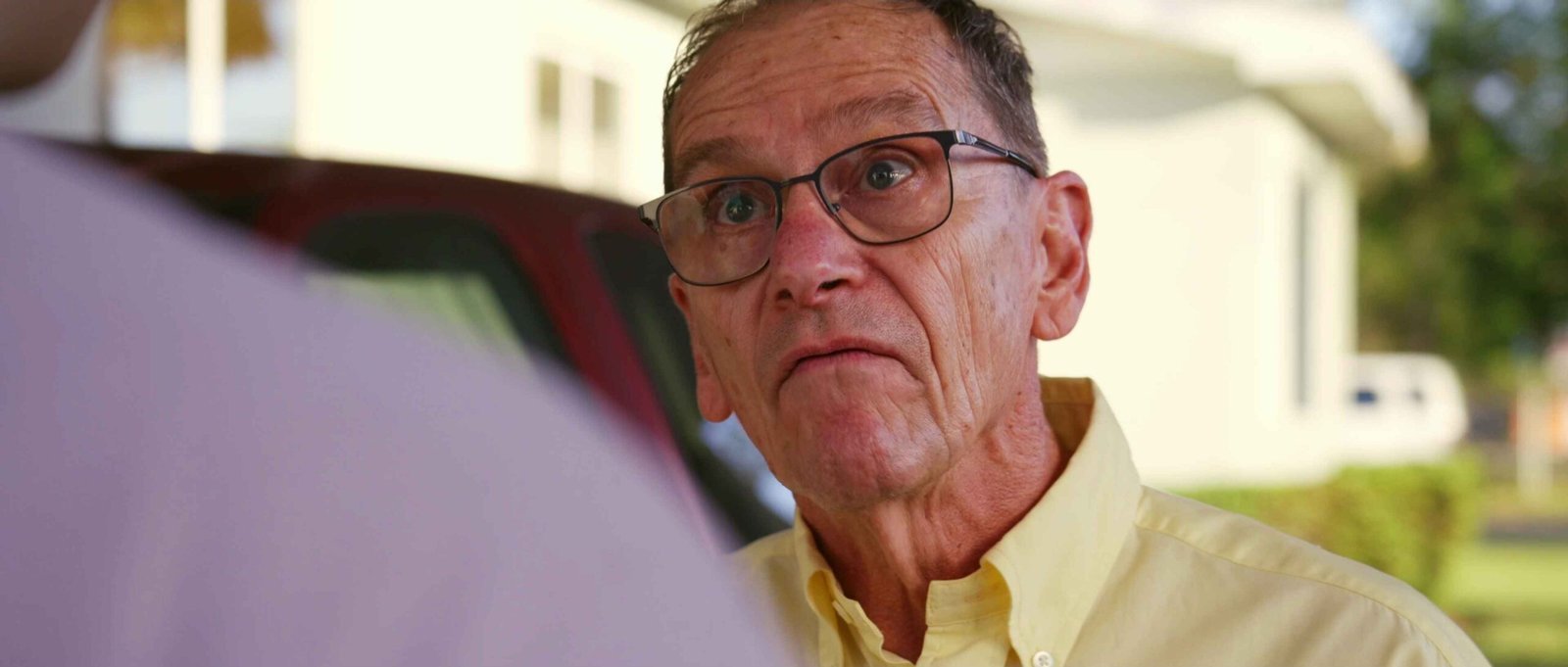
What Kind of Video Does Your Campaign Actually Need?
Not every nonprofit video serves the same purpose. A year-end giving campaign needs something different than a grant application. A volunteer recruitment push has a different emotional target than a gala presentation. One of the most common mistakes I see is organizations applying a single video format across every campaign — usually a short testimonial or a mission overview — regardless of what the campaign is actually trying to accomplish.
Different goals require different video formats, different emotional registers, and different distribution strategies. The tool below maps your campaign goal to the video approach that performs best for it — including what emotional thread to pull, how long your video should be, and where to put it once it's done.
One pattern I see consistently: organizations undershoot their year-end campaigns. They produce a two-minute overview video and send it to their whole list once. The organizations that raise the most video-assisted revenue treat year-end as a video series — a different story each week in November and December, each one introducing a new beneficiary or volunteer voice, each one building emotional momentum toward the December 31st deadline. The cumulative effect of hearing five different voices say "this organization changed my life" is categorically different from hearing it once.
Ready to Tell the Story That Changes Hearts?
We work with nonprofits across Central Florida to produce mission-driven video at budgets that make sense for organizations doing real work.
Book a Free CallNo contracts · No pressure · Just a real conversation.
The Ethics of Filming Vulnerable People
This is the section I care most about writing correctly, because I've seen it done wrong. When you're filming the people your organization serves — people who are in recovery, navigating poverty, experiencing family instability, healing from trauma — you are operating in ethically complex territory. The story you need is real. The person in front of your camera is also real, and their dignity is not a production resource. It is something you are responsible for.
Consent is not a checkbox. A beneficiary who has been told, implicitly or explicitly, that their continued access to services depends on their willingness to appear in a video has not freely consented. A beneficiary who is in the middle of a crisis and hasn't had time to think clearly about what they're agreeing to has not freely consented. A beneficiary who doesn't understand where the video will be shown, how it will be used, and how long it will remain public has not fully consented. Real informed consent is a conversation — not a signature on a form.
Before You Film Anyone Served By Your Organization
- Have a written consent form that uses plain language and specifies every platform and campaign the video may appear in.
- Ask: is this person stable enough — emotionally, situationally — to make a free decision about public exposure?
- Give them meaningful time to decide. Days, not minutes.
- Make explicit that saying no will not affect their access to services or their standing with your organization.
- If you're filming minors, think carefully about long-term consequences — a child photographed in crisis at age seven is still that photograph at age seventeen.
- Ask yourself: does this video honor the person it features, or does it use their pain as a fundraising mechanism?
That last question is the hard one. The line between honoring a story and exploiting it is not always bright. I've found the best test is this: would the person on screen, watching the finished video, feel proud of what they shared — or feel exposed? If your gut says exposed, the video needs to change before it ships, regardless of how effective it might be as a fundraising tool.
When we produced work with OneFamily FL, the families involved had agency at every step. We sent rough cuts. We gave veto power. We asked: "Is there anything in this that you'd rather not be public?" In one case, a parent asked us to remove a specific detail about their housing situation. We removed it without discussion. The resulting video was still powerful — because the emotional truth remained intact even after the detail was gone. Consent and storytelling are not in tension. They're how you earn the kind of footage that actually moves people.
On filming children: I'd recommend erring on the side of not showing children's faces in any video connected to foster care, trauma, or family instability — regardless of consent. The protective principle here outweighs the creative one. A child filmed today cannot fully anticipate what that footage will mean to them in ten years.
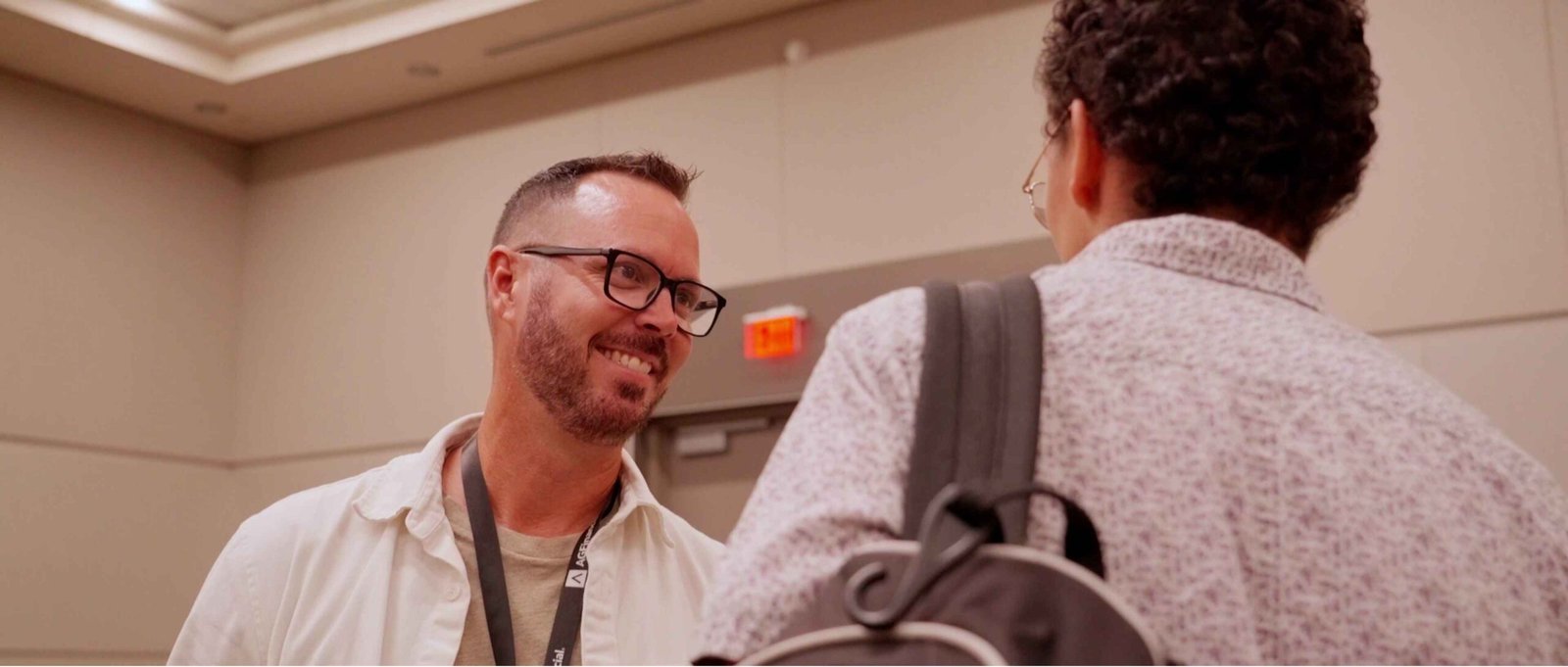
Meet Your Donor Where They Are
One of the most useful frameworks I've encountered in nonprofit communication is the donor journey — the path a person travels from complete unawareness of your organization all the way to being a loyal, recurring supporter who tells other people about you. Most organizations make video for one stage of that journey and try to use it everywhere. That's a mismatch. A video designed to convert a first-time donor won't work on someone who has never heard of you. A video that introduces your mission to a cold audience won't be what turns a warm prospect into a giver.
The donor journey map below shows five stages of that path and what video content is most effective at each one. Click any stage to see what the donor is thinking, what question they need answered, what video type addresses it, and where to put it.
The most underdeveloped stage in almost every nonprofit's video strategy is Stage 4 — after someone makes their first gift. There's typically a receipt email and maybe a thank-you letter. Almost never a video. This is a missed opportunity of enormous proportions. The window right after someone's first gift is when they're most emotionally open to becoming a long-term partner. A 60-second thank-you video from your executive director — personal, specific, warm — sent within 24 hours of a first donation can meaningfully increase second-gift rates. It doesn't need to be elaborate. It needs to be real.
Production Budget Realities for Nonprofits
I want to be honest with you here, because a lot of agencies aren't: nonprofit video budgets are usually limited, and that's okay. Great nonprofit video does not require a $20,000 production. Some of the most effective mission-driven work I've ever seen was shot with modest gear, edited without elaborate motion graphics, and distributed without a paid ad campaign. What it never skimped on was story, preparation, and care.
That said, "low budget" is not the same as "no investment." There's a floor below which technical quality starts to undermine emotional credibility. If your audio is difficult to hear, viewers will leave before the story lands. If your lighting makes your subject look ill or uncomfortable, the viewer's emotional attention goes to the distraction rather than the message. The minimum investment isn't about camera bodies or lens kits — it's about audio quality and baseline lighting that lets the story breathe.
How to Get More Out of a Limited Budget
- Batch your shoots. If you can identify three strong stories in the same quarter, shooting them in a single production day dramatically reduces your per-video cost.
- Invest in a hero video first. One beautifully produced 2–3 minute story video is more valuable than five mediocre ones. Build the flagship piece before distributing the budget across multiple short-form videos.
- Plan for vertical crops at the time of shoot. Shooting in a way that allows for a 9:16 crop means your single production gives you both a landscape version for your website and gala presentation and a vertical version for Instagram Reels and TikTok — effectively doubling your distribution for no additional cost.
- B-roll is not optional. A talking head video alone is harder to watch for more than 60 seconds. Budget time for B-roll — footage of your programs, your team, your facility, your beneficiaries in non-identifying contexts — that gives your editor material to work with.
- Ask about nonprofit rates. Many videographers — including us at Bright Valley Media — offer reduced rates for mission-driven organizations. It doesn't cost anything to ask.
On the question of DIY vs. professional production for nonprofits: I'd say the answer is context-dependent. For a quick social media update or a board meeting presentation, a well-lit phone video with a good lapel mic is entirely appropriate. For a year-end campaign, a gala presentation, or a grant application — anything where the video is doing heavy lifting and representing your organization to high-stakes audiences — professional production is worth the investment. The cost of a weak video in those moments isn't just the production fee you spent. It's the gift, the grant, or the partnership that didn't happen.
If you're working with a genuinely constrained budget, also consider approaching a local film school or videography program. Choosing the right videographer is worth the time even when cost is a primary consideration — a low-cost videographer who understands storytelling is infinitely more valuable than an expensive one who thinks in terms of deliverables.
Grant Application Video and Gala Presentation Video
These are two specific contexts that deserve their own treatment, because the rules are different from general fundraising video.
Grant Application Video
Grant reviewers watch a lot of videos. More than you think. By the time they get to yours, they've already seen six other organizations' impact reels. The ones that stand out are not the most polished — they're the most specific. A grant application video should do three things: establish the specific problem your organization addresses (with evidence), show proof that your approach works (ideally through a beneficiary story), and demonstrate organizational competence. That last one matters more than most nonprofits realize. Funders are not just investing in a cause — they're investing in a team's ability to execute. Your video should make them feel confident in your capacity, not just moved by your mission.
Keep grant application videos between 2 and 4 minutes. Many funders specify a length — follow it exactly. If they say 3 minutes, your video should be 2:55, not 3:15. Respecting the constraint signals that you can follow instructions, which matters more to program officers than you'd think.
Gala and Event Presentation Video
A gala video is the highest-pressure context in nonprofit video production. It plays in a room full of your most invested donors, often right before or during a live appeal. Everything depends on it landing emotionally in a room with ambient noise, competing attention, and a deadline of thirty seconds from when the video ends to when someone picks up a paddle or pulls out their phone to give.
For gala videos, I recommend: starting with sound — something that commands attention in the first five seconds before any visuals establish, because a quiet opening in a noisy room will lose the audience before you've started. Keep it under four minutes. End on an image of hope, not need — the final frame the audience carries into the ask should be the destination, not the problem. And always, always do a sound check in the actual room with the actual AV system before the event. Gala videos have been ruined by nothing more than a volume level that wasn't set correctly at load-in.
Gala video rule: The live ask that follows your video should be able to reference a specific person from it by name. "Maria's family is home tonight because of you" — said by your executive director thirty seconds after the video ends — is the connective tissue that turns an emotional moment into a giving decision. Script the transition before you script the video.
The Spiritual Dimension of Storytelling for Mission-Driven Work
I'm a person of faith. I run my business from a set of convictions about what work is for and who it ultimately serves. For mission-driven organizations — churches, faith-based nonprofits, Christian community organizations — there's a dimension to storytelling that secular marketing frameworks don't fully account for: the idea that bearing witness to someone's story is itself an act of dignity, and that telling it faithfully is a form of service.
"Each one of you is a letter of Christ, written not with ink but with the Spirit of the living God, not on tablets of stone but on tablets of human hearts."
I think about that passage when I'm sitting across from someone in an interview. They're telling me something true about their life. Something that cost them something. The camera is running. And my job isn't just to capture footage — it's to create a space where the telling of that story feels worthy of what it actually is. Not a content asset. A life.
For faith-based nonprofits specifically, the spiritual language and framing of your work is a feature, not something to sand off for broader appeal. There are donors who give to your organization precisely because you operate from a particular theological commitment — the idea that every person carries inherent worth, that restoration is possible, that the work matters regardless of scale. Your video should speak to those donors in the language they recognize. Don't produce a generic charity video when what you actually are is a community of people doing this work because of something they believe. That specificity is compelling, not limiting.
At the same time, I've seen faith-based organizations produce video that feels preachy in a way that closes doors rather than opening them. The most effective approach is to let the work speak the theology. Show the restoration. Show the dignity. Show what it looks like when people are treated as people. The viewer will hear what the work is saying without needing a scripture overlay to explain it. Trust the story to carry the conviction.
The Central Florida Nonprofit Community
Central Florida has a nonprofit landscape that is larger, more diverse, and more undercovered than most people realize. From the rescue missions serving the homeless population in Orlando to the community development organizations in Sanford and Deltona, from the church-based food pantries in DeLand to the youth programs in Kissimmee — the work being done in this region is significant and largely invisible to the major donor base that could sustain it.
Part of what drives my work in this space is the conviction that the gap between the story and the donor is often just a production question. The story exists. The people whose lives have been changed are there and often willing to speak. What's missing is the equipment, the expertise, and the time to capture it in a form that reaches the people who need to hear it. That's a solvable problem. It's what I do.
Nonprofits in Central Florida tend to operate with smaller communications staffs and tighter budgets than comparable organizations in Tampa or Miami. That means video production often falls to whoever happens to have a smartphone and some free time — which produces footage that documents but doesn't move. The organizations that have invested in even modest professional production have consistently reported stronger year-end campaigns, higher donor retention, and better volunteer conversion rates. The video isn't magic. But it is the difference between telling people about your work and showing them.
If you're a church or faith-based ministry in Central Florida navigating this same question, many of the same principles apply. The documentary approach to Christian mission storytelling is something I've thought and written about separately — and it connects directly to this work. Story done right serves mission regardless of whether the organization filing a 501(c)(3) or a church constitution.
OneFamily FL: What We Made and What We Learned
The project I referenced at the opening of this article — OneFamily FL — was one of the most instructive video experiences of my career. OneFamily FL works with families in the Florida foster care system, specifically focused on family preservation, reunification, and long-term stability. The work they do is quiet, intensive, and under-resourced in the way most direct-care nonprofits are.
When they approached us about a documentary-style project, the first conversation we had was not about cameras or formats or deliverables. It was about trust. Who in their community would be willing to speak publicly? What boundaries needed to be set before we ever asked anyone to sit for an interview? What did they need the video to accomplish — and for whom? That conversation took weeks, not hours. And it was the most important production work we did on the entire project.
What we produced was not a slick fundraising reel. It was a documentary-style piece that followed a family through a reunification process — with their full, enthusiastic consent, after months of relationship-building. We spent time at their home. We filmed ordinary moments: a meal, a homework session, a backyard conversation. We gave the family a chance to review footage and remove anything they weren't comfortable with. The final piece ran about twelve minutes — long by fundraising video standards, but appropriate for the platform it was distributed on (YouTube and a hosted landing page for major donor cultivation).
The response from major donors who saw it was different from anything we'd seen from the organization's previous materials. People didn't just give — they called. They asked about volunteering. They connected other people. The video had created a different relationship between the donor and the mission, because it had created a specific human relationship: donor to family. Not donor to statistics. Not donor to institution. Donor to people.
What we learned: the length that feels right for a fundraising video and the length that actually serves the story are sometimes different. For major donor cultivation, longer-form documentary video can be more effective than the industry-standard 2–3 minute format, because major donors are making a larger emotional and financial commitment and they want to feel that the relationship is proportionate. Know your audience before you cut your edit.
We also learned that the families who participated found the experience valuable in its own right — not just as a production outcome. Several of them said that the process of telling their story helped them articulate and own what they'd been through. The video had served the people in it, not just the organization. That's the standard I hold every nonprofit video I'm involved in to.
Let's Tell the Story That Moves Your Donors to Give
We work with nonprofits, churches, and mission-driven organizations across Central Florida. Honest rates. No contracts. No pressure. Just a real conversation about your work and how video can serve it.
Book a Free CallNo contracts · No pressure · Just a real conversation.