Healthcare video marketing isn't just a different industry—it operates under a completely different set of rules, stakes, and patient psychology. Get it right, and your practice becomes the obvious choice before a patient ever calls your front desk. Get it wrong, and you either violate HIPAA or produce content so bland it could belong to anyone.
I've produced video content across a wide range of industries throughout Central Florida. Healthcare stands apart, and not because it's harder to film in a clinical environment (though that's a real consideration). It stands apart because the person watching your video is often scared, confused, or in pain. They're not evaluating your production quality. They're asking one question: "Can I trust this person with my health?" Every creative decision—from the music choice to the lighting to whether your physician sits or stands—has to answer that question before it answers any other.
This guide is written specifically for medical practices, group practices, specialty clinics, and healthcare organizations in the Orlando metro area. It covers what types of video work, what compliance looks like in practice, how to build a content strategy by specialty, and how to think about the patient journey from awareness to loyal advocate. It's not a generic marketing playbook with "healthcare" swapped in—it's built for this specific market.
Why Healthcare Video Marketing Is Different (and Why It's Worth It)
Most industries sell products or services. Healthcare sells confidence. When someone books an appointment with a physician they've never met, they're handing over something extraordinarily personal—their body, their history, their fears. That transaction requires a level of trust that a logo on a sign and a five-star Google review can only partially provide. Video fills the gap that text and static imagery cannot. It lets a potential patient see your face, hear your voice, watch how you interact, and begin to form a genuine sense of whether you're someone they can trust.
This is why healthcare has one of the highest video-to-conversion rates of any industry when the content is done correctly. A patient who watches a two-minute introduction video from a primary care physician before booking is not the same patient as one who simply found the practice in a directory. The video-viewed patient arrives warmer, more prepared, and with fewer objections. Front desk staff spend less time managing anxiety. Appointment no-show rates drop. This isn't theoretical—it's what happens when trust is built before the visit rather than during it.
Central Florida's healthcare market adds another dimension. The Orlando metro is one of the fastest-growing regions in the country, with a population that includes long-term residents, transplants, retirees moving to Lake, Volusia, and Osceola counties, and a massive seasonal and tourism-adjacent population. Patients here aren't searching for a practice they grew up knowing. They're starting from zero—which means the practice that shows up first with the most trust-building content wins. That is a significant and exploitable advantage for practices willing to invest in video.
"The art of medicine consists of amusing the patient while nature cures the disease. But trust is the medication that works before any visit."
The counterargument I hear from practice managers is: "Our patients don't watch videos. They're older." I'd push back on that hard. Adults over 55 now represent one of the fastest-growing YouTube demographics in the country. Health-related video content is among the most searched categories on the platform. The behavior is there. The question is whether your practice is showing up when patients go looking.
There's also a referral dimension that often gets overlooked. Physicians refer to other physicians. When a PCP is deciding which cardiologist or orthopedist to recommend, professional credibility matters—and video communicates that credibility in ways a business card does not. A well-produced provider credentials video or a specialty explainer can influence the referring provider as much as the patient.
Compliance First: What You Need to Know Before Filming
Before we talk about what to create, let's talk about what can get you in trouble. Healthcare video marketing sits at the intersection of marketing law, HIPAA regulations, state medical board guidelines, and platform advertising policies. None of these are reasons to avoid video—but all of them need to be understood before you start production. Compliance is not an obstacle to good healthcare marketing; it's a framework that, when respected, actually produces better content.
HIPAA and patient privacy are the first and most critical considerations. Never film, photograph, or reference a patient—even a satisfied one—without explicit, written, HIPAA-compliant authorization. This means a proper release form, not just a verbal "okay." It means specifying exactly what the footage will be used for, what platforms it will appear on, and giving the patient the ability to revoke consent. This is not a technicality—unauthorized use of patient information, including footage that could identify someone as a patient at your facility, carries real legal and regulatory consequences. When in doubt, consult your compliance officer or healthcare attorney before any patient appears on camera.
Testimonials require the same scrutiny. A patient saying "Dr. Smith saved my life" is powerful, but it requires documented consent and should avoid specific medical details unless those have been cleared. The FTC also requires that testimonials reflect typical patient experiences, not outliers, or that they be clearly labeled as atypical results. This is one area where working with a production team that understands the healthcare space makes a real difference—a generic videographer won't know to ask these questions.
Practical rule: If you're not sure whether you need a consent form for a shot, get one anyway. There's no downside to having too much documentation and a real downside to having too little. Maintain signed consent forms in a secure, practice-managed location separate from your production company's files.
State medical board guidelines vary and can restrict how physicians advertise their services, what claims can be made in marketing materials, and how credentials must be displayed. Florida's rules are relatively permissive, but specialty boards—particularly for surgery—can have stricter standards. If you're planning surgical demonstration footage or before/after imagery, it's worth a conversation with your board or your malpractice carrier before production begins.
Platform advertising policies add another layer, particularly for Facebook and Google. Both platforms have specific restrictions around healthcare advertising targeting, remarketing to patient audiences, and certain categories of health content. This doesn't mean you can't advertise—it means you need a strategy that works within those guardrails. Organic video content on your own channels and on YouTube is typically the least constrained, which is one reason it should anchor your healthcare video strategy.
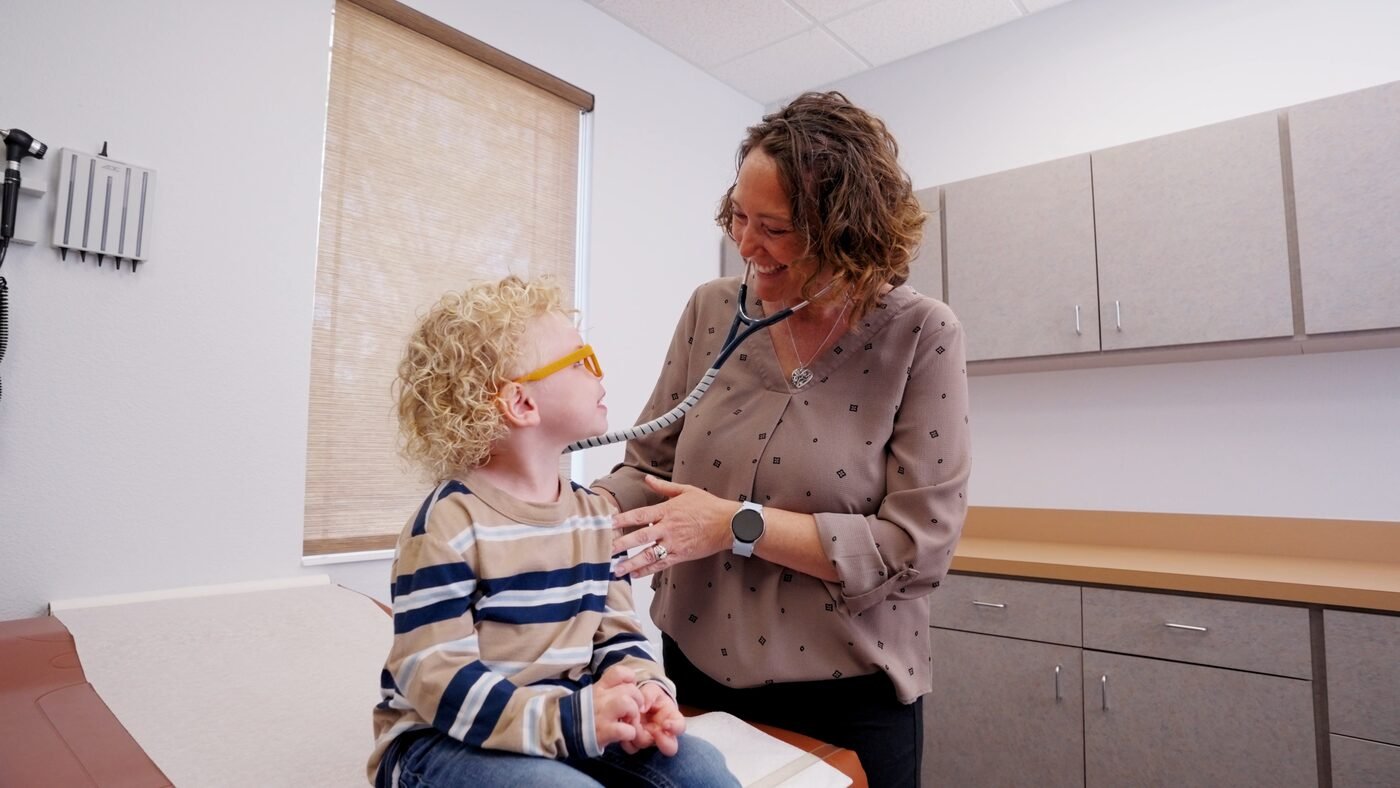
The 6 Most Effective Healthcare Video Types
Not all video types perform equally in healthcare. The ones that drive the most patient conversions are those that directly address the two things every prospective patient needs before booking: confidence that you can help them, and confidence that you'll treat them well. Here are the six formats that deliver most consistently across different practice types.
1. Provider Introduction Video
This is the single highest-impact video most practices aren't making. A 90-second to two-minute video where the physician speaks directly to the camera—not at a white coat event, not behind a desk stacked with files, but in a genuine, human moment—is the closest thing to a first appointment that a potential patient can have before they've booked. It doesn't need to be a list of credentials. It needs to answer: Who are you? Why did you choose this work? What do you want patients to know before they come to see you?
2. Procedure or Treatment Explainer
Fear of the unknown is one of the top reasons patients delay care or cancel appointments. A clear, calm explanation of what a procedure involves—what to expect before, during, and after—removes that fear directly. These videos work exceptionally well on specialty practice websites and convert anxious searchers into actual bookings. They also reduce the amount of pre-appointment education your staff has to deliver by phone.
3. Office Environment Tour
For patients dealing with anxiety—which in healthcare is nearly everyone—familiarity with the physical environment before arriving reduces stress significantly. A well-shot office tour that shows the waiting area, exam rooms, and friendly staff signals that this is a place that's ready for them. For dental practices and mental health offices in particular, the environment tour often carries more conversion weight than the provider intro because the fear is often as much about the place as the person.
4. Patient Education Content
Educational videos about conditions, symptoms, or treatment approaches position your practice as a trusted resource rather than just a service provider. A family medicine practice that publishes a clear explanation of when strep throat needs antibiotics builds a different kind of relationship with its patient community than one that only communicates through appointment confirmations. This content also drives organic search traffic from patients actively researching their conditions.
5. Patient Testimonial (Done Right)
With proper consent in place, patient testimonials are among the most persuasive pieces of healthcare content available. The key is authenticity over polish. A real patient speaking sincerely about how care changed their quality of life—even filmed simply, with natural light and honest emotion—outperforms a highly produced testimonial that feels coached. The production should serve the story, not overwhelm it.
6. New Service or Location Announcement
Practices that expand, add services, or open new locations often under-communicate those changes. A short, energetic announcement video sent to existing patients and posted to your Google Business Profile and social channels is one of the highest-ROI video investments a practice can make—because the audience already trusts you. You're not building trust; you're deepening it while communicating something genuinely useful.
Find the Right Video Strategy for Your Specialty
The right video strategy for a primary care practice looks nothing like the right strategy for a surgical specialty or a mental health clinic. Each specialty has a distinct patient psychology, a different set of fears to address, and a different distribution landscape. The tool below gives you a tailored starting point based on your practice type. Use it as a framework, not a rigid prescription—every practice has its own voice and patient community.
Ready to grow your practice with video?
Book a free call. We work with medical practices throughout Central Florida and understand the compliance, tone, and patient trust requirements unique to healthcare marketing.
Book My Free CallNo commitment · HIPAA-aware production · Free 30 minutes

Building Patient Trust Through Video Before the First Appointment
Trust is not something patients extend automatically, and in healthcare, withholding it isn't irrational—it's protective. The experience of navigating the healthcare system has left a lot of people feeling like a number rather than a person. The practices that earn trust before the first appointment are the ones that communicate in a way that respects that history and demonstrates genuine interest in the patient as a human being, not just a chart.
Video is uniquely suited to this because it communicates nonverbal information that text cannot convey. The way a physician makes eye contact with the camera. Whether their tone is warm or clinical. Whether the office feels sterile or welcoming. Whether staff members in the background look engaged or distracted. All of this is processed unconsciously by the viewer and contributes to a gut-level sense of whether this is a place they want to be. You can't manufacture that with stock footage or a polished corporate script—it has to be real.
"People will forget what you said, people will forget what you did, but people will never forget how you made them feel."
The most common mistake I see medical practices make in their video content is confusing credentials with trust. Listing board certifications, hospital affiliations, and years of experience is relevant—it addresses a rational concern. But it doesn't address the emotional one, which is whether this person actually cares about me. The practices that convert patients most effectively through video are the ones where the physician says something genuinely human: "I became a family physician because I wanted to be the doctor I didn't have growing up." That line does more work than three minutes of credential recitation.
There are a few specific techniques that consistently build pre-visit trust in healthcare video. The first is direct eye contact with the lens—not at a monitor off-camera, not at an interviewer beside the lens, but directly into the camera as if speaking to the patient. It feels unnatural to most physicians at first, and it's one of the most important things we coach on set. The second is natural speech over scripted delivery. Patients can detect a memorized script. We typically work with physicians using a structured outline and conversational prompts rather than teleprompter copy. The third is showing the actual space—real exam rooms, real equipment, real staff—rather than a conference room cleared out for filming.
The timeline question also matters here. Trust-building video content isn't a campaign—it's infrastructure. A great provider introduction video will work for two to three years without updates unless the provider changes roles or the practice significantly evolves. The return on a single well-produced trust-building video, measured over its useful life, is substantial. The practices that treat it as a campaign spend often under-invest and then wonder why the results are thin.
Map Your Patient Video Journey
Most healthcare practices, when they think about video, think about a single piece of content—usually a provider intro or a general about-us video—and call their video strategy complete. That's a starting point, not a strategy. A real strategy accounts for the fact that different patients are at different stages of the decision process, and that the right content for someone who has never heard of your practice is completely different from the right content for someone who is on your website comparing you to a competitor down the street.
The patient journey framework below maps video content to each stage of the decision process. It's not about creating more content for its own sake—it's about making sure that wherever a potential patient first encounters your practice, there's something for them that speaks directly to where they are. A practice with five strategically mapped videos covering each stage of this journey will consistently outperform a practice with twenty unfocused posts that all cover the same ground.
A few things worth noting about this framework in the healthcare context specifically. The "Unaware" stage content works best when it's genuinely educational and not branded—a video about managing seasonal allergies in Central Florida's oak pollen season, for example, that happens to come from your ENT practice. The value-first approach is not just better marketing strategy; it's also more defensible from a compliance standpoint because it's informational rather than promotional. The "Deciding" stage content, by contrast, is exactly where patient testimonials and FAQ videos earn their keep, provided proper consent is in place.
Production Considerations Specific to Healthcare Settings
Filming in a medical environment introduces a set of logistical and aesthetic challenges that don't exist in most other production contexts. The goal is to capture the genuine environment of the practice in a way that reads as professional and welcoming on screen—which requires more preparation than most practices realize and a production team comfortable navigating clinical spaces.
Scheduling around patients is the primary logistical challenge. For ethical and HIPAA reasons, video production should happen when patients are not present unless every visible patient has signed appropriate release documentation. For most practices, this means scheduling shoots before or after clinic hours, on off days, or during lunch closures. It requires buy-in from leadership and coordination with front-of-house staff. The good news is that the controllability of a patient-free environment actually produces better footage—you're not managing unexpected variables mid-shoot.
Lighting in clinical environments is almost always a problem out of the box. Fluorescent overheads, small exam rooms, equipment that creates visual clutter, and windowless spaces with harsh reflective surfaces all present challenges. A production team that shoots in healthcare settings knows how to bring the right lighting kit, manage color temperature, and create a visual environment that feels warm and professional even in a 10x12 exam room. This is one of the clearest indicators of whether a videographer has experience in this category.
Audio in clinical environments requires equal attention. HVAC systems, equipment hum, and hard surfaces create significant ambient noise challenges. We always use lavalier microphones on-body for physician interviews rather than relying on camera or boom microphones, and we do a location sound check before committing to any filming position. A provider introduction video recorded with poor audio communicates something about the practice that no amount of visual polish can counteract.
What to wear on camera is a question that comes up on every healthcare shoot. White coats read very differently on camera depending on the specialty and the intended message. For primary care and family medicine, a white coat over casual-professional clothing often reads as approachable and expert simultaneously. For mental health providers, a white coat can feel clinical and distancing in a setting where the goal is warmth. For surgical specialists, credentials attire—scrubs or a white coat over dress clothes—reinforces the competence message. There's no universal answer, but it's a conversation worth having before the shoot, not on the day of.
Staff involvement should be selective and voluntary. Including front desk staff or medical assistants in the footage humanizes the practice and reinforces the "team" message. But visibly uncomfortable staff members can undermine the tone of the entire piece. We always do brief camera introductions with any non-physician staff before filming them, and we give people a genuine choice to participate. The resulting footage is always better when people want to be there.
Where Healthcare Videos Perform Best (and Where They Don't)
Distribution strategy for healthcare video is not the same as distribution strategy for a restaurant or retail brand. The platforms that drive the highest-quality patient acquisition are not necessarily the ones with the largest audiences. Healthcare patients search with intent—they know something is wrong, they're looking for a solution, and they want to find someone they can trust quickly. Meeting them in high-intent channels beats interrupting them in passive-scroll channels in almost every case.
Google Business Profile is the most underutilized video distribution channel for medical practices. Practices that add short videos—provider intros, office tours, procedure overviews—to their GBP listing see measurable improvements in profile engagement and click-through to website or phone. This is the channel where patients are actively evaluating you against competitors who appeared in the same map pack. Being the practice with a face, a voice, and a real environment versus a static logo is an enormous advantage at this decision point.
Practice website is where conversion happens. A homepage video that loads fast, plays immediately, and communicates warmth and expertise in the first 15 seconds can meaningfully improve the conversion rate of everyone who arrives on your site from any source. Service and provider pages with supporting video reduce the information gap that leads patients to bounce and search further. The website is where you have the most control and where the patient is furthest into the decision process—it deserves the highest-quality video content you produce.
YouTube is the primary platform for educational and awareness-stage content. Healthcare searches on YouTube represent hundreds of millions of queries per year. A practice that consistently publishes useful, accurate, well-produced educational content on YouTube builds a long-term organic audience that feeds new patient acquisition continuously. The investment compounds over time in a way that paid advertising does not.
Facebook and Instagram work best for practices whose patient demographics include active social media users, particularly in the 35–55 range for primary care, pediatrics, and dental. Instagram Reels work well for visually compelling specialties—cosmetic dentistry, dermatology, plastic surgery—where before/after content and procedure aesthetics translate to the format. Facebook is still a strong channel for local awareness campaigns and community engagement for practices with a family or neighborhood-medicine identity.
Where healthcare video often underperforms: TikTok outside of specific demographics, LinkedIn for direct patient acquisition (though it works well for B2B referral relationships between practices), and Twitter/X for almost all practice types. These are not where your patients are making healthcare decisions, and distributing there distracts from investment in the channels that actually drive bookings. Platform-chasing is as much a risk in healthcare video as under-investment—concentrate your content where your patients concentrate their attention.
Getting Started with Healthcare Video in Central Florida
The Orlando metro's healthcare landscape is genuinely competitive. Between the large hospital systems—Orlando Health, AdventHealth, HCA Florida—and the growing number of independent and private equity-backed specialty groups, patient attention is not a given for anyone. The practices that consistently grow in this environment share a common trait: they invest in the patient relationship before the patient walks in the door, and video is the most powerful tool for doing exactly that.
If you're starting from zero, the highest-leverage first move is a provider introduction video. It doesn't need to be elaborate. A well-lit, clearly recorded, two-minute video where your physician speaks authentically about who they are and why they care about their work is transformative for practices that have never had one. Get it on your website homepage, your Google Business Profile, and your top-traffic service pages. Measure the before and after through your existing analytics. The impact is typically visible within 60 to 90 days.
The second priority for most practices is an office environment video—a 60-to-90-second walk through the physical space that shows patients what to expect when they arrive. Pair this with the provider intro and you've addressed the two core pre-visit anxieties: "Is this the right person?" and "Is this a place I'll feel comfortable?" Those two videos alone, done well, will outperform a year of inconsistent social media posting.
From there, build toward a full patient journey content map—educational content for awareness, specialty explainers for consideration, and testimonials (with proper consent) for the decision stage. The goal is not to have the most content; it's to have the right content at each touchpoint. A practice with six strategically produced videos and a clear distribution plan will consistently outperform a practice with forty pieces of content that were created without a clear patient-journey strategy.
We work with medical practices across Central Florida—from solo practitioners in Altamonte Springs and Lake Mary to multi-location specialty groups in the greater Orlando area. Every engagement starts with a conversation about your patient, your compliance environment, your current marketing infrastructure, and what success looks like for your practice specifically. There is no template. There's a process, and it starts with a free call.
Central Florida note: Orlando's healthcare market is shaped by a population that includes significant numbers of people who relocated here within the last five years. They don't have a long-standing relationship with a local physician. They're choosing from scratch—and the practice with the strongest video presence at the moment of that search wins the patient. That window is real, it's open right now, and most practices are leaving it on the table.