Drone footage has gone from cinematic novelty to genuine business tool in less than a decade. I've been producing video for businesses across Central Florida for over ten years, and I've watched the aerial shot go from "wow factor" gimmick to one of the most strategically useful formats in a business's video toolkit — when it's used correctly. The key phrase is: when it's used correctly. Because drone video done without a plan, without proper FAA credentials, or without integration into a broader production is one of the easiest ways to spend $500 and get nothing back for it.
This guide is my attempt to give you a complete, honest picture of what drone videography for business actually looks like — the legal requirements, what it realistically costs in Orlando and Central Florida, what industries it genuinely serves, and how to combine it with ground-level footage so the result feels like a complete story rather than a sequence of impressive-but-disconnected shots from the air. By the end, you'll know whether drone video belongs in your next project and exactly what to ask for when you hire a pilot.
What Drone Video Actually Is (Beyond Just Aerial Shots)
Most people hear "drone video" and picture a sweeping overhead shot of a building or property. That's one application — a useful one — but it's a narrow view of what drone cinematography can do for a business. Modern drones with stabilized gimbals and high-resolution sensors are capable of shots that were previously impossible without a helicopter or crane, and many of those shots have nothing to do with how high the drone is flying.
Think about a low-altitude tracking shot following a car through a resort entrance, or a slow reveal that rises from eye level up to just above the roofline of a new construction project, or a smooth lateral glide past a restaurant's waterfront patio. These are all drone shots. They don't look like "drone footage" in the stereotypical sense — they look like expensive production value that happens to be delivered by a small unmanned aircraft. That distinction matters, because when you understand the full range of what a drone can do, you start to see the real opportunity.
Drone video gives you three things that ground-based camera work cannot deliver: altitude perspective (seeing a location the way no person ever naturally sees it), fluid movement through space without the bump and constraint of a camera dolly, and scale — the ability to show how big something is, how far it extends, how it fits into its surroundings. All three have genuine business applications, depending on what you're trying to communicate.
The Types of Drone Shots That Actually Do Marketing Work
- Reveal shots: Starting low or tight on a subject, then pulling back and rising to reveal context. Works brilliantly for real estate, resorts, and construction reveals.
- Orbit shots: Circling a structure or landmark at a fixed altitude. Creates a sense of presence and scale without needing motion graphics or complex editing.
- Tracking shots: Following a subject — a car, a person walking the property, a boat on a lake — from above or behind. Creates narrative motion that ground cameras can't replicate.
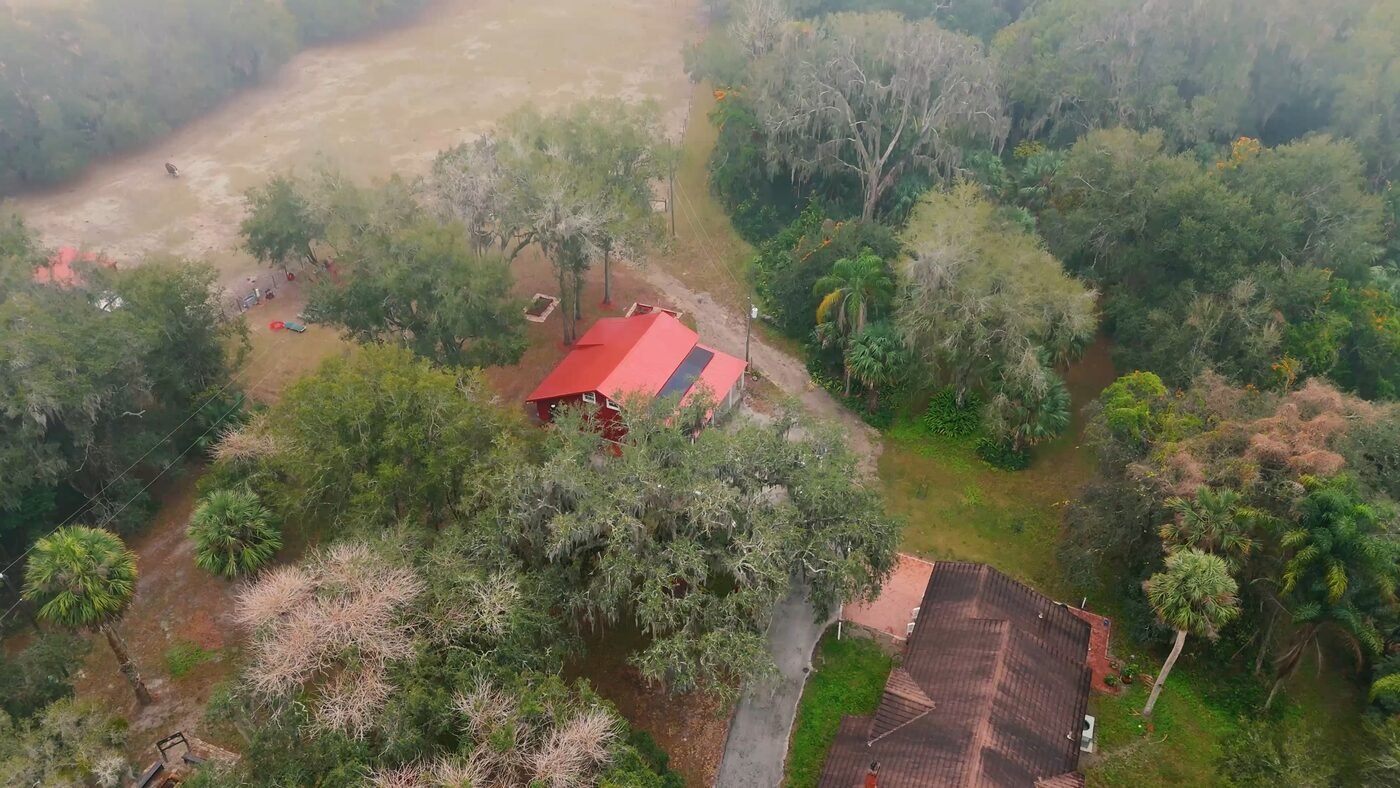
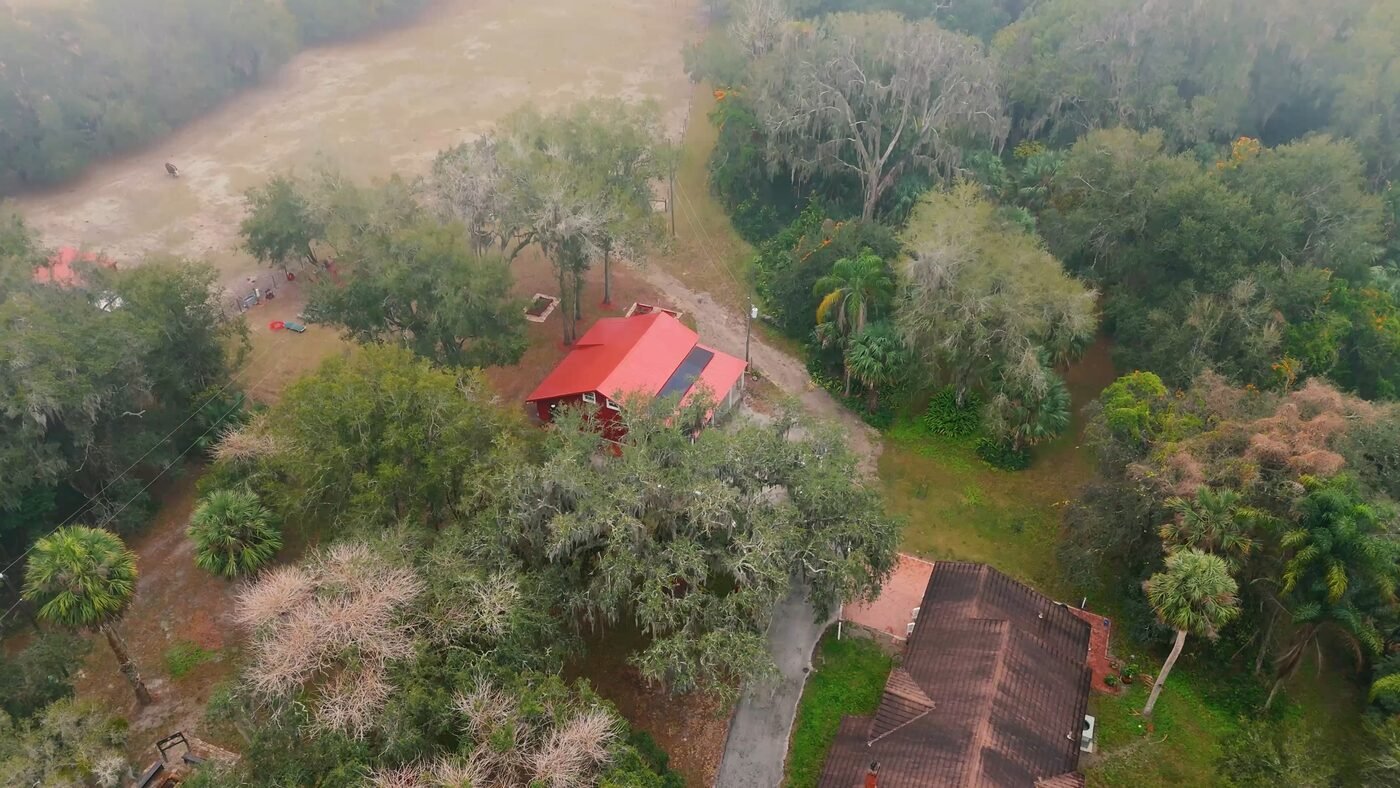
- Top-down ("bird's eye") shots: Straight overhead, looking directly down. Used in environmental, land survey, and construction contexts to show layout and progress.
- Low-altitude glide shots: Flying just above ground level through a space. These feel cinematic and immersive rather than "drone-y," making them versatile for hospitality and event coverage.
- Hyperlapse or timelapse from altitude: Compressing time from above to show construction progress, crowd builds, or environmental change over time.
Understanding which of these serves your specific goal is the first conversation you should be having with a drone operator — not "can you fly over my building," but "what shot would best communicate what I'm trying to say about this place?"
One thing drone video cannot do: Tell an emotional story on its own. Aerial footage is context — it sets a scene, establishes scale, creates atmosphere. It almost always needs ground-level footage to carry the narrative. A drone reel without human storytelling is just scenery. Beautiful, useful scenery, but not a complete marketing asset.
When Drone Footage Is Worth It — and When It's Just a Gimmick
I'll be direct: drone footage is not automatically an upgrade. I've seen plenty of projects where adding aerial shots made the final video feel more impressive without making it more effective at its actual job — converting prospects, communicating a value proposition, building trust. The question isn't whether drone footage looks good. It almost always looks good. The question is whether it serves the communication goal of the video.
When Drone Footage Genuinely Earns Its Place
Drone video is genuinely worth the investment when location is a meaningful part of what you're selling. A real estate agent marketing a ten-acre lakefront property isn't just selling a house — they're selling a setting, a privacy, a way of life that can only be communicated from altitude. A resort in Kissimmee competing against a dozen other properties on the same booking platform needs the viewer to feel the scale of the pool area, the surrounding landscape, the layout of the amenities. A homebuilder in Volusia County showing off a new development needs the aerial view to convey the community feel that street-level shots simply can't capture.
Drone footage also earns its place when you're showing process, scale, or transformation over time. Construction companies, land developers, and environmental organizations use drone footage to document progress in a way that's both practical and emotionally resonant. There's something genuinely moving about watching a bare piece of Central Florida land go from cleared soil to a finished commercial building — and the only way to capture that transformation in full is from above.
When Drone Footage Is Just a Gimmick
Drone footage is a gimmick when it's added because it looks cool rather than because it communicates something specific. I've been asked to add drone shots to video projects for service businesses where the location was completely irrelevant to the service — a bookkeeping firm, an insurance agency, an online coaching practice. Flying over the office building doesn't tell a viewer anything useful about what those businesses do. It's visual noise dressed up as production value.
The other situation where drone footage fails: when the ground-level content isn't already strong. Aerial footage is a complement, not a rescue strategy. If you have a compelling story, clear interviews, and strong visual content at ground level, adding drone shots elevates the whole production. If you don't have those things, no amount of sweeping aerial footage will save the video. It just makes an unfocused video more expensive.
Drone Video Use Case Explorer
The best drone shot for a hotel resort is not the best drone shot for a construction site. Each industry has its own visual priorities, its own audience expectations, and its own deployment context. Use the tool below to get specific guidance for your industry or use case — what shots to capture, how to use the footage, what it typically costs, and FAA authorization requirements.
One pattern you'll notice across every use case: the drone footage alone is never the full answer. It layers on top of your existing video strategy — whether that's a brand video, a property tour, or customer testimonial videos. Aerial footage is a visual amplifier. The strategy underneath it still determines whether the whole thing converts.
FAA Part 107: What It Is and Why Hiring an Unlicensed Pilot Is a Real Risk
This is the section most drone articles skip over or bury in a footnote. I'm putting it near the top because it directly affects your business — not just the pilot's. If you hire someone to fly a drone for commercial purposes and they're operating without an FAA Part 107 Remote Pilot Certificate, you as the client can share in the legal and financial liability. That's not a hypothetical. The FAA has pursued civil penalties against businesses, not just operators, when unlicensed commercial drone operations go wrong.
What Part 107 Actually Requires
The FAA Part 107 certification is the legal baseline for anyone operating a drone for commercial purposes in the United States. It requires passing a knowledge test covering airspace regulations, weather, drone performance, radio communication, and emergency procedures. The test is administered at an FAA-approved testing center and must be renewed every two years. A licensed Part 107 pilot has demonstrated they understand the rules — and more importantly, they know how to operate within them, including when to ask for authorization.
Part 107 has standard operating restrictions: drones must stay below 400 feet above ground level in uncontrolled airspace, must remain within the pilot's visual line of sight at all times, cannot fly over people, cannot operate at night without a waiver, and must give way to manned aircraft. These aren't bureaucratic fine print — they're safety rules written in response to real incidents. A licensed pilot knows them and abides by them. An unlicensed hobbyist-for-hire often does not.
Airspace Authorization: The Layer Most People Miss
Here's where it gets more complicated, and where a lot of would-be budget drone operators fail without even realizing it. Even with a Part 107 certificate, a pilot cannot legally fly in controlled airspace — the airspace around airports and in certain urban areas — without prior authorization. In Central Florida, this is a critical consideration, because the Orlando metro is covered by multiple overlapping controlled airspace designations radiating from Orlando International Airport (MCO), Orlando Executive Airport (ORL), Sanford International Airport (SFB), and Daytona Beach International Airport (DAB).
Authorization for controlled airspace is obtained through the FAA's LAANC system (Low Altitude Authorization and Notification Capability) or through a manual waiver process. LAANC authorization can often be granted nearly instantly for operations below certain altitudes in certain grids. But if the location you're shooting doesn't fall within a pre-approved LAANC grid, the authorization process can take weeks. A professional drone operator working in Central Florida plans around this from the start — they don't show up on shoot day and discover they can't fly.
Ask before you book: When you're vetting a drone operator, ask specifically: "Are you Part 107 certified, and have you verified airspace authorization for this specific location?" If they can't answer both questions with specifics, keep looking. The right pilot will have already pulled the airspace map before they quote you.
"We went with the cheaper guy once. He showed up, flew for twenty minutes, and we found out later he wasn't licensed. We couldn't use any of the footage professionally because we had no way to document compliance. It cost us double to reshoot it properly."
FAA Compliance & Production Checklist
Whether you're hiring a drone operator or managing a project that includes drone work, there are 16 items you should be able to confirm before, during, and after production. This isn't designed to make the process feel scary — it's designed to make it easy. A professional operator will handle most of these automatically. The checklist exists so you know what to expect and what to ask if something seems incomplete.
Need Drone Coverage for Your Next Project?
We handle FAA compliance, airspace authorization, and seamless integration with ground-level footage. Book a free call and let's plan it together.
Book a Free CallNo contracts · No pressure · Just a real conversation.
What Drone Video Actually Costs in Central Florida
Pricing for drone video in the Orlando and Central Florida market varies widely, and a lot of the variance has nothing to do with quality — it has to do with what's included, what level of compliance the operator provides, and whether you're hiring a standalone drone pilot or an integrated video production team. Here's how I'd break down the tiers you'll encounter.
Budget Tier: $150–$400 per session
At this price, you're often getting a solo operator with a consumer-grade or prosumer drone, no written contract, potentially unverified Part 107 credentials, and minimal post-production work. The footage may be technically usable, but you're taking on risk — both legal (compliance documentation) and practical (no reshoot guarantee, no backup equipment, weather cancellations handled informally). For personal use or internal documentation, this tier might be acceptable. For commercial use intended for your website, ads, or listing presentations, I'd be cautious.
Mid-Tier: $500–$1,200 per session
This is where professional standalone drone operators in Central Florida typically price their services. You'll get verified Part 107 certification, liability insurance documentation, proper airspace authorization, a clear contract, and edited footage delivered in a professional format. A good operator at this level will do a pre-shoot site assessment, provide multiple edited clips, and deliver color-graded footage ready for use. If you're adding drone footage to an existing video project as a standalone add-on, this is typically the category to budget within.
Integrated Production: $800–$2,500+ added to ground-level video
When drone footage is part of a comprehensive video production — shot by the same team that handles your ground-level footage — the cost reflects both the additional equipment and the editing integration. This is usually the smartest way to buy drone video, because the aerial and ground footage are cut together by the same editor who understands the complete project. The result feels cohesive rather than like two separate productions spliced together. At Bright Valley Media, we incorporate drone into projects where it genuinely serves the story, and we handle all compliance and authorization as part of the process.
What Drives Cost Up
- Controlled airspace locations: Sites near MCO, ORL, or SFB require LAANC authorization or manual waivers, which add time and planning complexity.
- Large properties or multiple locations: Multi-acre sites or multiple addresses in a single session require more battery management, more flight time, and more post-production.
- Complex permits: State parks, certain beaches, and historic districts may require filming permits through Florida DEP or local municipalities.
- Rush turnaround: Standard delivery in Central Florida is 3–7 business days; rush delivery typically adds 20–40% to the cost.
- Higher-spec equipment: Cinema-grade drones (Inspire series, Matrice with cinema cameras) cost significantly more than standard DJI Mavic/Air-class equipment.
How to Integrate Drone Footage with Ground-Level Video
The single most common mistake I see in business videos that include drone footage: the aerial shots are treated as a separate showcase rather than as part of an integrated story. You can almost always tell when this has happened — the video suddenly shifts from a human-scale narrative to a series of sweeping landscape shots, and then shifts back. The tonal break is jarring. It signals that two different people made two different things and an editor stitched them together at the end.
Properly integrated drone and ground footage tells a single continuous story where the camera perspective shifts naturally between scales. The way to achieve this is to plan the drone shots as part of the editorial structure before anyone shows up with equipment — not as an afterthought after the ground-level shoot is complete.
Structural Techniques That Work
- The aerial-to-ground reveal: Open with a drone shot establishing context and scale, then cut to ground-level footage as the story begins. This orients the viewer spatially before bringing them into the intimate, human-scale narrative.
- The altitude match cut: Find a visual element that appears in both the drone footage and the ground footage — a roofline, a landmark, a distinctive architectural detail — and cut between the two angles at the moment that element is featured. Creates visual continuity across radically different perspectives.
- Aerial b-roll during narration or interview: Use drone shots as visual breathing room during a longer spoken section. The viewer's eye gets a break from close-up interview framing without losing the audio thread of the story.
- The bookend: Open and close with drone footage to frame the story geographically. Common in real estate and resort videos because it signals "this place is the point" from frame one to frame last.
- Progress cutaways: For construction or development content, use aerial shots at specific intervals to show scale-of-progress that's impossible to communicate from the ground. These work as punctuation marks in a longer construction documentary.
"When you look down from altitude, you understand the relationship between things in a way you simply can't from the ground. That perspective is what aerial video gives your audience — and for the right business, that shift in understanding is worth everything."
The practical implication for hiring: when you're evaluating a video production company for a project that includes drone, ask to see examples where they shot both the aerial and ground-level content. A team that does both will almost always produce a more cohesive final product than two separate vendors whose footage is cut together in post. It's the difference between a video that feels like one unified story and a video that feels like a highlight reel with a drone segment grafted on.
Technical Considerations: 4K, Stabilization, and Weather
You don't need to become a drone technical expert to make good decisions about drone video production, but a few technical realities are worth understanding — because they directly affect what you get and how much it costs.
4K vs. Lower Resolutions
Most professional drone operators in Central Florida are shooting at 4K resolution as a baseline standard. This matters for two reasons: it gives the editor room to crop and reframe in post without quality loss, and it ensures the footage doesn't look degraded when displayed on modern 4K monitors and TV screens. If you're producing content for broadcast, film, or large-format display, you may want to ask specifically about higher-spec equipment. For standard digital use — website, social media, ads — 4K from a DJI Mavic 3 Pro or equivalent is genuinely excellent quality.
One nuance: the drone's internal color profile matters as much as the raw resolution. Footage shot in a flat or log color profile gives the colorist significantly more data to work with in post-production, resulting in a richer, more filmic final look. Footage shot in a standard or vivid profile straight-to-color looks good out of the camera but has much less flexibility in editing. If color grading matters to your project, confirm that the operator shoots in a professional color profile.
Stabilization and Gimbal Quality
Drone footage looks smooth because modern drones use 3-axis motorized gimbals to isolate the camera from the aircraft's movement. The quality of that gimbal determines how smooth the footage looks, especially during faster maneuvers or in mild wind. Consumer drones from reputable manufacturers (DJI being the dominant brand) have excellent stabilization for the price point. Cinema-grade drones are significantly smoother but dramatically more expensive. For most commercial business video applications, a DJI Mavic 3 Pro, Air 3, or equivalent is entirely sufficient.
Weather: The Underestimated Variable in Florida
Florida's weather is genuinely one of the biggest operational variables for drone production, and it requires specific planning that wouldn't apply in most other states. The afternoon thunderstorm pattern from May through September means that a shoot scheduled for 3 PM is frequently cancelled or abbreviated — and a good drone operator in Central Florida will tell you this upfront and help you schedule around it.
- Wind: Most professional consumer drones are rated for winds up to approximately 25–30 mph. Wind gusts above that threshold require cancellation or significant footage quality sacrifice. Check wind forecasts at altitude, not just ground level — wind speeds increase significantly above the ground in open areas.
- Afternoon thunderstorms: Plan drone shoots in Central Florida for early morning (6–9 AM) or early afternoon (10 AM–1 PM) from May through September. Afternoon shoot windows are highly unreliable in summer months.
- Marine layer and haze: Coastal locations in Volusia County and Brevard County frequently have morning haze that clears by mid-morning. Golden hour — the hour after sunrise — often offers the most visually dramatic aerial footage in Central Florida.
- Rain aftermath: After a storm passes, aerial footage can look spectacular due to cloud drama, saturated colors, and low-angle light. If you have flexibility in scheduling, the hour after afternoon storms clears is often golden.
Central Florida Airspace: What You Actually Need to Know
Central Florida has one of the most complex commercial airspace environments in the country. The Orlando metro sits at the intersection of multiple Class B, Class C, and Class D airspace designations, multiple active airports, and unique no-fly zones related to major theme park facilities and restricted military training corridors. If you're planning drone video anywhere in the greater Orlando area, understanding the airspace landscape isn't optional — it determines whether a shoot is feasible, how long authorization takes, and what it costs.
The Airport Circles That Cover Most of Metro Orlando
Orlando International Airport (MCO) is a Class B airport, meaning its controlled airspace begins at ground level immediately around the field and extends outward in a layered structure up to 10,000 feet MSL. Any drone operation within approximately 30 miles of MCO requires awareness of where those airspace layers begin and end. Orlando Executive Airport (ORL) is a Class D airport with a 5-mile controlled airspace radius. Sanford International (SFB) and Daytona Beach International (DAB) each have their own Class C and Class D designations covering significant portions of Seminole, Volusia, and Brevard counties.
In practical terms: if you're shooting in Deltona, DeLand, Sanford, Kissimmee, or anywhere within the immediate Orlando metro, you're almost certainly in controlled airspace. That's not a disqualifier — it just means the pilot needs LAANC authorization or a manual waiver, and that needs to be handled in advance of the shoot date. A professional operator who regularly works in Central Florida will know this and handle it as a matter of course.
Theme Park No-Fly Zones
The major theme park corridors in Orange and Osceola counties — particularly the area around Walt Disney World, Universal, and SeaWorld — have FAA-designated Temporary Flight Restrictions and special use airspace designations that effectively prohibit drone operations without very specific waivers that are extraordinarily difficult to obtain. If your business is located near International Drive, Lake Buena Vista, or the I-4 corridor between downtown Orlando and Kissimmee, your drone operator needs to assess the airspace map carefully before committing to a shoot.
Beach Locations and State Parks
Volusia County beaches, Canaveral National Seashore, and Florida state parks have their own permit requirements on top of FAA airspace rules. Drone operations at New Smyrna Beach, Daytona Beach, or along the A1A corridor require coordination with local authorities and, in some cases, Florida Department of Environmental Protection (DEP) filming permits. These aren't automatically granted, and they're not free. Budget for permit costs when planning beach drone footage, and give yourself at least two to three weeks of lead time for permit applications.
The Deltona and DeLand advantage: For businesses in western Volusia County — Deltona, DeLand, Orange City, Debary — drone operations are often more straightforward than in metro Orlando. The airspace around these areas is primarily Class G (uncontrolled) or Class E, meaning operations below 400 feet AGL often don't require LAANC authorization. Confirm with your specific coordinates, but this part of Central Florida is generally more accessible for drone work than the Orlando core.
How Bright Valley Media Handles Drone Work
I want to be straightforward about how we approach drone video at Bright Valley Media, because it's different from what you'll encounter with a lot of production companies and freelance operators in Central Florida. Drone footage is something we incorporate into projects when it genuinely serves the project's purpose — not as an upsell, not as a default add-on, and not because it looks impressive in a demo reel.
When a client comes to us about a project that might include drone footage, the first question I ask is: what are you trying to help your audience understand that ground-level footage can't communicate? If the answer to that question is clear — scale, location context, property layout, construction progress — then drone footage belongs in the plan. If the answer is "I don't know, it just seems like something we should have," then we'll have an honest conversation about whether it's the best use of budget for that particular goal.
Our Compliance Process
Every drone project we take on begins with an airspace assessment for the specific coordinates of the shoot location. We use the FAA DroneZone and B4UFLY systems to assess airspace class, and we obtain LAANC authorization or manual waivers for any controlled airspace operations. We document that authorization and provide it to clients as part of the project deliverables — so you have a record of legal compliance in your files.
We carry liability insurance on all productions, and we include drone operations coverage in that policy. Before any flight, we conduct a site assessment for obstacles, restricted areas, and any local ordinances that might affect the shoot. Florida has some of the most complex state-level drone regulations in the country, and we stay current on them.
What Clients Can Expect
When drone footage is part of a project, it's planned as part of the editorial structure from the beginning — not tacked on afterward. The aerial and ground footage are shot to cut together, not to exist as parallel edits. You'll receive color-graded footage that matches the overall look and feel of the complete video, not raw drone clips that feel stylistically disconnected from the rest of your content.
We're based in Deltona and work regularly across Volusia, Seminole, Orange, Brevard, and Flagler counties. We know the airspace. We know the permit requirements. We know where the morning light hits well and where the summer afternoon schedule makes golden-hour shoots the only reliable option. That local knowledge — built over years of shooting across Central Florida — is part of what you're getting when you work with us.
If you're considering a project that involves drone video — whether it's a real estate listing in DeLand, a resort video in Daytona, a construction update in Sanford, or a brand video in Orlando — start with a free call. We'll tell you honestly whether drone footage belongs in the plan, what it should cost, and what it should accomplish. You can also explore our video production cost guide or our brand video guide to get a fuller picture of how production investment decisions work.
The perspective from above changes what your audience understands about your business. But only if it's the right shot, in the right context, in the hands of someone who knows the rules of the airspace and the rules of good storytelling. That's the combination that makes drone videography worth every dollar — and that's what we build toward on every project.