There is a category of content that most businesses are either afraid to make or have never seriously considered — and it is consistently outperforming everything else on every platform. Behind-the-scenes video. Not the highlight reel. Not the perfectly-lit brand film. The real stuff: the messy desk, the early-morning setup, the moment things go wrong and you fix them anyway. After producing over 1,000 videos for businesses across Central Florida over the past decade, I've watched clients who leaned into this kind of content build audience trust faster than anything a polished marketing budget could buy.
This guide is about behind-the-scenes video marketing done intentionally. How to think about it, what types work for your industry, where to post it, how to capture it without blowing up your workday, and how to build the kind of audience that already trusts you before they ever pick up the phone. If you've been waiting for permission to show the real side of your business — this is it.
Why Behind-the-Scenes Content Beats Polished Video
Let me tell you something I've watched happen with my own clients, repeatedly: a business owner spends real money on a polished brand video — two cameras, professional lighting, color grading, the works — and it performs okay. Then they pull out their phone during setup the next morning and post a 45-second clip of the crew rigging lights to the ceiling, and it gets three times the engagement of the produced video. Same business. Same brand. The unplanned content wins.
This is not an accident. There is a structural reason behind-the-scenes content outperforms polished content in terms of trust and engagement. Polished content, no matter how well made, registers to the viewer's brain as intentional persuasion. And intentional persuasion triggers skepticism. It's not that people don't like beautiful videos — they do. But beautiful, perfect content is something people consume and move past. BTS content is something people stop and watch, because it feels like they're being let in on something they weren't supposed to see.
There's also a practical reason this matters specifically right now. Every major platform's algorithm — Instagram, TikTok, YouTube, LinkedIn — is rewarding content that keeps people watching and commenting. Behind-the-scenes content is inherently more watchable because it's genuinely interesting. People want to know what happens behind the curtain. They always have. When you give them that, they reward you with their attention, and the algorithm rewards you with reach. It's one of the rare situations where doing the more authentic thing also happens to be the more strategic thing.
I run a faith-driven business, and this principle resonates with me on a level that goes beyond marketing strategy. Transparency is a form of integrity. When I show clients the actual process — the early hours, the gear setup, the revision conversations — I'm not just building a brand. I'm living out the same honesty I try to bring to every other part of how I operate. That alignment between values and content is something audiences can feel, even if they can't articulate why they trust you more after watching.
The Psychology of Transparency and Authenticity
The reason behind-the-scenes content works so powerfully comes down to how human beings process trust. Trust is not built by hearing someone say they're trustworthy. It's built by watching someone behave in ways that are consistent with their stated values — especially when they don't think anyone is watching. BTS content simulates exactly that. You're showing your audience how you operate when the cameras aren't "on," even though they are. The vulnerability of that act is what makes it credible.
"Vulnerability is not weakness. And that myth is profoundly dangerous. Vulnerability is the birthplace of innovation, creativity, and change. It's also the fastest path to genuine human connection."
Brown's research on vulnerability maps directly onto what we see in business video content. The brands that are willing to show imperfection — a delivery that got delayed and how they handled it, the challenge of scaling a team, the honest conversation about how long a project actually takes — consistently build deeper customer loyalty than brands that project nothing but confidence and polish. Perfection is aspirational. Authenticity is relatable. Relatable is what builds a community around your brand.
There's also the parasocial relationship dynamic at work. When someone follows your BTS content consistently — watching your early mornings, hearing your thought process, seeing your team interact — they develop a relationship with you before they ever become a customer. By the time they're ready to hire a videographer (or a contractor, or a lawyer, or a chef), they don't feel like they're evaluating strangers. They feel like they're calling someone they already know. That pre-built familiarity collapses the sales process in a way that no amount of cold outreach or ad spend can replicate.
The trust flywheel: Consistent BTS content creates familiarity. Familiarity lowers the psychological cost of reaching out. Lower perceived risk means more conversions from your existing audience, at a higher average contract value. The audience you build slowly, through authenticity, tends to be dramatically easier to sell to than the audience you rent through paid advertising.
There's one more element worth naming here: differentiation. In almost every industry, the majority of businesses are putting out the same category of content — polished service showcases, promotional graphics, "we're hiring" posts. The business that consistently shows the human reality of their work stands out not just because the content is better, but because it's categorically different from everything else in the feed. In a landscape of sameness, authenticity is a competitive advantage.
Types of Behind-the-Scenes Content That Actually Work
Not all BTS content is created equal. "Behind-the-scenes" is a broad category that encompasses a wide range of formats, and the ones that build the most trust tend to share a common thread: they're showing something that takes skill, care, or courage to put on display. Here are the formats I've seen perform consistently well across multiple industries.
Process Videos
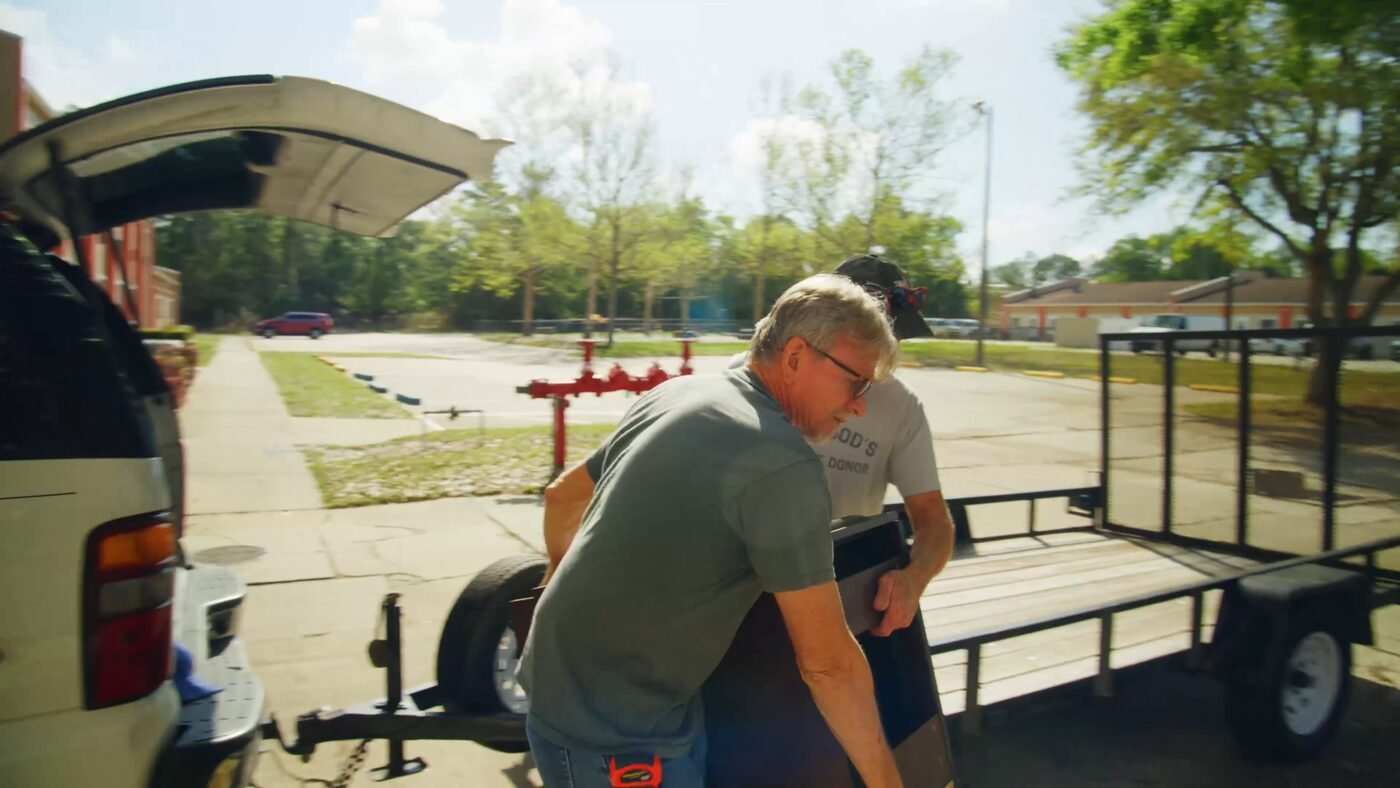
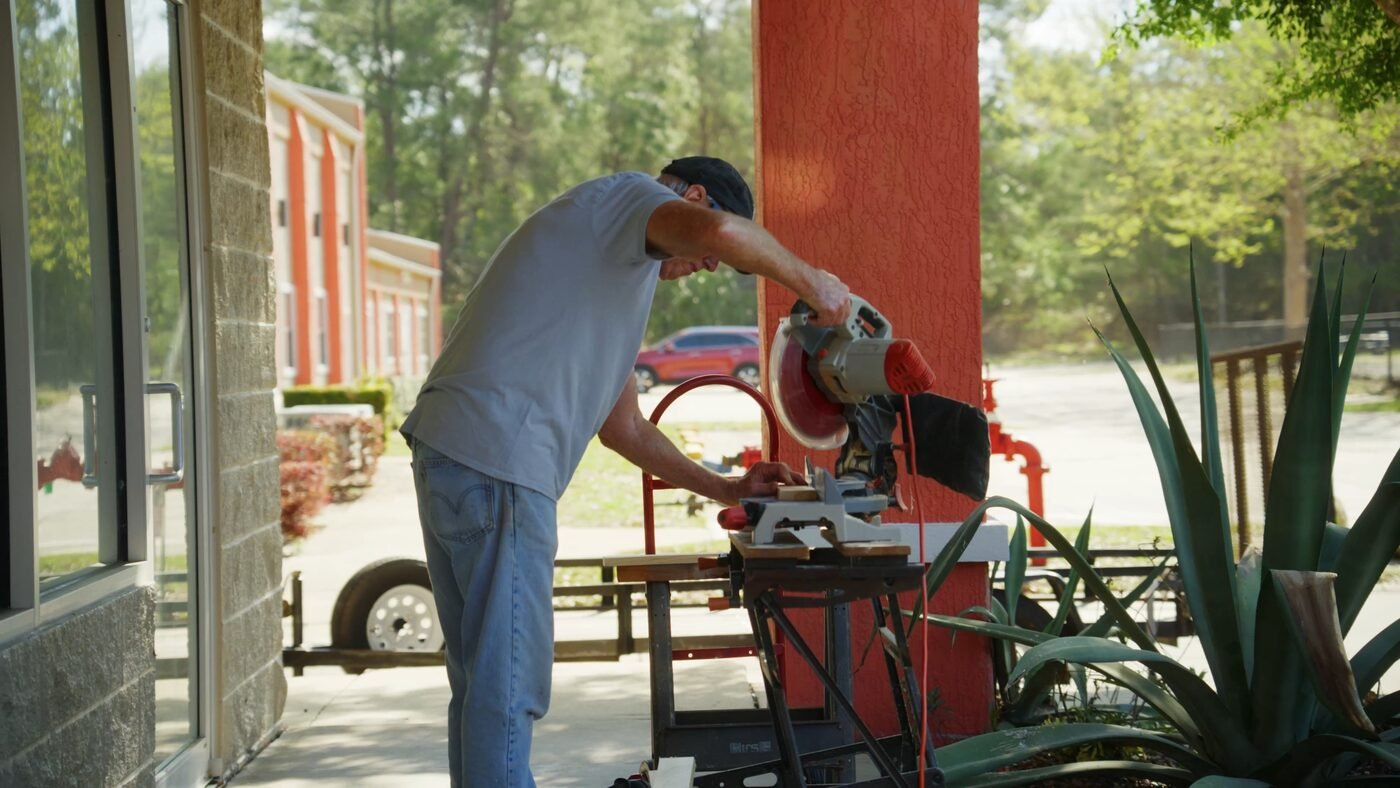
Show how you actually do the thing you do. Not a polished explainer — a real look at your process as it's happening. A kitchen in a restaurant prep before service. A law office team doing intake on a complex case. A contractor walking through a job site explaining what's been done and what's next. The audience for this content isn't just curious — they're evaluating whether you know what you're doing. A process video is essentially a live demonstration of competence. When done well, it answers the question "can I trust these people with my money?" better than any brochure ever could.
Day-in-the-Life Content
Follow the owner, a team member, or the business through a real day. This is the most human format in the BTS toolkit. The morning setup, the unexpected problem, the lunch that doesn't happen because something urgent came up, the satisfaction at the end of a hard day. Day-in-the-life content works because it humanizes the business in a way that nothing else can. Viewers stop seeing a company and start seeing people — and people are far more compelling than brands.
Before/After with the Middle Shown
Before/after content is a proven format for a reason — it demonstrates transformation. But what makes a before/after BTS video more powerful than a typical before/after is showing the middle: the actual work that created the transformation. Not just the empty room and the finished renovation — show the demolition, the framing, the moment the tiles went up. The middle is where expertise lives. Showing it is how you prove yours.
Team Culture Moments
Candid moments with your team — a birthday celebration, a hard conversation handled well, a team lunch where everyone is laughing — communicate your company culture in a way that job postings and mission statements cannot. This matters for two audiences simultaneously: prospective customers who want to know what kind of people they'll be working with, and prospective employees who want to know if this is a place worth their time. Culture content does double duty, and it costs nothing to capture beyond the willingness to hit record.
Mistakes, Learning, and Pivots
This is the hardest category for most business owners to lean into, and the most powerful when they do. Talk about the job that didn't go as planned. The product launch that flopped. The client who wasn't happy and how you made it right. The process you overhauled because the old one wasn't working. Vulnerability of this kind builds a level of trust that no success story can match, because it signals something rare: honesty even when it's uncomfortable. Audiences respond to it with an almost visceral loyalty.
BTS Content Planner: Ideas for Your Business Type
The most common thing I hear from business owners when I suggest leaning into BTS content is "I don't know what to film." That's usually not true — they know their business inside and out. What they're really saying is "I don't know which parts of my business would be interesting to an audience." The answer depends heavily on your industry and who you're trying to reach. Use the planner below to pull specific BTS ideas tailored to your type of business.
A few things to keep in mind when using these ideas. First, you don't need to film all five — pick the one that feels most natural to how your business actually operates, and start there. Second, notice that almost every idea above can be captured on a smartphone. The equipment barrier to BTS content is essentially zero. Third, the best BTS content often happens spontaneously. Get in the habit of pulling out your phone when something interesting is happening, rather than waiting for a planned shoot day. The most authentic moments are rarely scheduled.
Want BTS Content That Actually Builds Your Brand?
Book a free strategy call. We'll look at your business, your audience, and what BTS content would move the needle most — then build a plan you can actually execute.
Book My Free CallNo contracts · No pressure · Just a real conversation.
Where to Post Behind-the-Scenes Video
The platform you choose shapes the format, the length, and the tone of your BTS content — and different platforms serve very different goals. Here's how I think about distribution for BTS video specifically.
Instagram Stories and Reels
Instagram Stories is the native home of BTS content. The format was designed for ephemeral, casual, in-the-moment sharing, which is exactly what most BTS video is. Stories work best for daily or near-daily captures — the short clips that wouldn't work as a standalone post but, strung together, give followers a genuine window into your day. Reels, on the other hand, are better for more curated BTS that has a clear beginning and end: a 30-to-60-second process video, a before/after reveal, a team moment set to music. Reels get far more organic reach than Stories because the algorithm actively distributes them to non-followers.
TikTok
TikTok rewards consistency and personality above everything else. If you're going to use TikTok for BTS content, the single most important thing is to show your face and speak to camera. BTS content on TikTok that performs tends to have a strong hook in the first two seconds ("this is what really happens when you order a custom cake") and delivers genuine information or entertainment in the next 30 to 60 seconds. The restaurant, food, and trades industries in particular have built enormous TikTok audiences purely through behind-the-scenes process content. The platform's discovery algorithm is still the most powerful organic reach engine available to small businesses.
YouTube Shorts and Long-Form
YouTube is the platform I recommend most strongly for any business with a service that takes real skill or involves a complex process. YouTube Shorts (under 60 seconds) work well for quick BTS clips and can drive traffic to your channel. Long-form BTS content on YouTube — a 10-to-15-minute day-in-the-life video, a detailed process walkthrough, a project timelapse with narration — tends to attract the highest-intent viewers of any platform. Someone who watches a 12-minute video about how you do what you do is very close to being a buyer. YouTube also carries SEO value that no other social platform matches. A well-titled YouTube video can rank in Google search for years.
LinkedIn is underestimated for BTS content, especially for B2B companies, professional services, and any business that sells to other business owners. The format that works here tends to be slightly more reflective — a 60-to-90-second video with a written caption that shares a business lesson alongside the visual story. "Here's what we learned when we overhauled our onboarding process" with video footage of the team working through it will outperform a polished company update every single time. LinkedIn's algorithm heavily favors native video, and business owners who post it consistently build authority with their professional network in ways that compound over time.
Start with one platform. The biggest mistake is trying to post BTS on every channel simultaneously from day one. Pick the platform where your target audience is most active and post consistently there for 90 days. Get your systems down, understand what performs, and then add a second channel. Trying to do everything at once almost always results in doing nothing consistently.
How to Capture BTS Without Disrupting Your Work
The most common reason business owners don't post BTS content isn't lack of ideas or lack of willingness — it's the perceived friction of stopping what you're doing to pull out a camera, think about what to say, film it, and then figure out what to do with the footage. Let me give you the system that removes almost all of that friction.
The "One Shot" Rule
Commit to capturing one authentic moment per day, maximum. Not five pieces of content. Not a whole content day. One shot. It might be a 20-second clip of your workspace at the start of the day. It might be a quick pan around a job site. It might be a 30-second to-camera explanation of what you're working on right now. One shot. That's the entire commitment. The habit matters more than the volume, and one shot per day creates 30 pieces of raw content per month, which is more than most businesses are currently producing.
Phone Mount and Audio Investment
The two pieces of equipment that move a smartphone BTS video from "looks amateur" to "looks intentional" are a simple phone mount and a clip-on microphone. A basic GorillaPod or desk mount costs under $30. A Rode Wireless GO or DJI Mic Mini runs $150 to $250. Those two purchases eliminate the two biggest production problems in casual BTS content — shaky footage and wind/background noise. With clean, stable footage and decent audio, your content will look and sound better than 90% of what businesses are currently posting.
Designate a "BTS Lens" Team Member
If you have any team members, identify one person who has a natural instinct for capturing moments and give them explicit permission and responsibility to document the day. This takes the cognitive burden off the owner — you don't have to remember to film because someone else is handling it. Give them a few guidelines (shoot horizontal for repurposing, capture process moments, get team members' permission before posting people's faces), and let them go. Even three or four good clips per week is a significant content pipeline.
On days when you're at a client site or on a job, a quick 30-second clip at arrival, one during the work, and one at wrap covers the whole story. You can literally do this in under five minutes total and walk away with a compelling day-in-the-life video that only needs a caption and a platform.
The Right Editing Approach for BTS Content
The editing philosophy for BTS content is almost the opposite of the philosophy for a brand film. With a brand film, you're crafting every frame, controlling the pacing, making deliberate aesthetic choices. With BTS, heavy-handed editing is the enemy. The moment it looks produced, the authenticity that makes it work starts to erode. Here's how to edit BTS content in a way that keeps it feeling real while still making it watchable.
Minimal Cuts, Maximum Continuity
BTS content that jumps between 15 different clips in 30 seconds feels frantic and loses the immersive quality that makes the format effective. Aim for longer, more continuous clips with fewer cuts. Let a moment breathe. Let someone finish a thought without cutting away. This is counterintuitive for anyone trained on standard marketing video editing, but it's what audiences on every platform are gravitating toward. The slower, more observational approach to BTS editing consistently outperforms the heavily-cut, high-energy version.
Text on Screen, Not Voiceover
Add simple, clean text overlays instead of scripted voiceover. "Day 3 of the renovation" or "here's what the edit suite looked like at 6am" tells the story without requiring a perfectly-spoken narration track. Most BTS content is watched silently on mobile — captions and text overlays are what make it comprehensible for the majority of your audience. Keep the text minimal. A single line of context is usually all you need.
Music: Low and Intentional
If you use music, keep it low in the mix — 20 to 30% volume at most. BTS content with blaring background music feels like it's trying too hard, and it overwhelms the ambient sound that makes the footage feel real. When ambient sound is available — the noise of a kitchen, the hum of tools on a job site, the sound of a busy studio — keep it in the mix. Ambient sound is authenticity. It tells viewers they're really there.
"Authenticity is the new branding. The brands that will win over the next decade are the ones willing to be genuinely, uncomfortably real. Stop trying to look perfect. Start trying to be honest."
When to Invest in Polished BTS
There is a version of BTS content that benefits from professional production — specifically, the longer-form documentary or day-in-the-life pieces designed to live on YouTube or to anchor a major campaign. If you're building a flagship piece of BTS content that you want to perform for years, it's worth bringing in professional support to handle the multiple-angle capture, the sound design, and the editing. At Bright Valley Media, we regularly produce what I'd call "elevated BTS" — content that feels authentic and unguarded but is produced to a standard that holds up on any screen. It's a different conversation than phone-captured Stories, but for the right business and the right goal, it's one of the most effective video investments available. Learn more about our brand video services and what that kind of project looks like.
How Often Should You Post Behind-the-Scenes Content?
The right BTS publishing frequency depends entirely on how much bandwidth you actually have — not how much content you think you should be producing. Consistency over a long time horizon always beats a burst of activity followed by silence. The businesses that build the deepest audience trust through BTS content are the ones that show up regularly, even imperfectly, week after week. Use the planner below to find the right cadence for your actual available time.
One thing worth emphasizing: quantity is not the goal. The business owner who posts four genuine, thoughtful BTS pieces per month will build more trust and more audience than the one who posts 20 rushed, uninspired clips. The bar for BTS content is authenticity, not volume. If you're not feeling it on a given day, don't force it. Forced authenticity is worse than no content at all — audiences can tell the difference.
Building an Audience That Trusts You Before They Buy
The real power of a consistent BTS content strategy isn't in any individual video — it's in the cumulative effect of showing up authentically over months and years. The audience you're building through this content is fundamentally different from the audience you reach through paid advertising. They've chosen to follow you. They've watched you work. They've seen how you handle challenges. By the time they're ready to hire someone in your category, they're not going to your website as a stranger. They're arriving as someone who has already decided they like and trust you.
This pre-built trust manifests in concrete ways. Clients who have followed my BTS content for a while before booking tend to come in without the typical skepticism about pricing and timelines — they've seen the work. They tend to have higher average project values because they understand what professional production actually involves. And they tend to be significantly easier to work with, because the relationship is built before the contract is signed.
The Three Stages of BTS Audience Trust
Stage 1 — Aware. They've seen your content, maybe liked a few posts. No relationship yet, but you're on their radar. This stage can last weeks or months. Your only job is to keep showing up with something real.
Stage 2 — Familiar. They follow you consistently, watch your Stories, comment occasionally. They know who you are, what you do, and roughly what working with you would feel like. This is where most of your future customers are living right now — and they haven't booked yet because the timing isn't right, not because they're on the fence about whether they trust you.
Stage 3 — Ready. Something in their life or business changes — a new product launch, a rebrand, an event coming up — and you are the first person they think of. The reason you're first is entirely because of the consistent BTS presence you've built. The sale happens almost without a sales conversation, because the trust was accumulated long before anyone needed to be persuaded.
Think of BTS content as a long-term trust investment. You're not going to post a process video on Tuesday and close a deal on Friday. But the business owner who posts authentic BTS content every week for two years will find that their sales conversations have fundamentally changed — shorter, warmer, with higher close rates and higher average values. The compounding effect is real. It just takes patience to see it.
This is also where the connection to video and customer trust becomes concrete. Every BTS piece you publish is a micro-deposit in the trust account you're building with your audience. Each one is small. Together, they're substantial. The businesses that understand this and play the long game consistently outperform the ones chasing short-term viral moments or relying entirely on paid acquisition. Check out our guide on social media video strategy for how to fit BTS into a broader content system.
What BTS Looks Like for Central Florida Businesses
I'm based in Deltona, and most of the businesses I work with are within a 60-mile radius — Orlando, Winter Park, Sanford, DeLand, Daytona Beach. What works for BTS content in Central Florida has some regional texture worth acknowledging. We have a diverse, entrepreneurially active market, a culture that respects authenticity and hustle, and an audience on social platforms that responds particularly well to genuine storytelling over promotional content.
I've watched a DeLand-area restaurant owner build a following of 40,000 on TikTok almost entirely through BTS kitchen content — real prep, real mistakes, real reactions when something turns out exactly right. That following translates directly to reservation demand. I've watched a Sanford contractor use Instagram BTS to go from unknown to fully booked 12 weeks out, with no advertising spend. I've watched a healthcare practice in Lake Mary use LinkedIn day-in-the-life content to attract staff and patients simultaneously. In each case, the content was low-budget, high-authenticity, and consistent. That formula works in this market.
What doesn't work as well here is content that feels imported from a national brand playbook — too polished, too generic, too disconnected from the actual place and community. Central Florida audiences respond to people who feel like they actually live here, work here, and care about the community. If your BTS content mentions Deltona traffic, the Florida heat at a job site, or what it's actually like to run a business in this market, it connects in a way that generic content never will.
If you're a Central Florida business owner trying to figure out where to start with BTS content, the honest answer is: start with whatever is genuinely happening in your business this week. You don't need a content calendar. You don't need a ring light and a script. You need to pull out your phone, point it at something real, and hit record. The sophistication comes later. The willingness to show up authentically comes first — and that part is entirely up to you.
When you're ready to add professional support to what you're capturing organically, or to build a flagship BTS piece that does real marketing work at scale, that's where we come in. I've spent ten years helping businesses across this region tell the truth about their work in a way that's compelling, strategic, and deeply human. That's what Bright Valley Media does — and if any of this resonates with how you want to show up in your market, I'd love to have a conversation. Here's how to choose the right videographer for that kind of project.